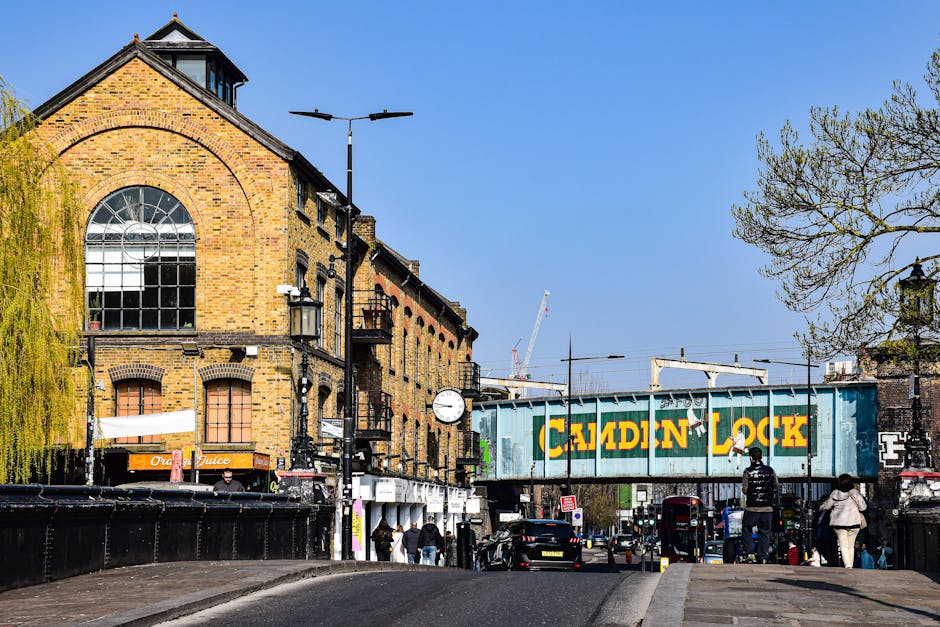
Camden Market rubbish collection insider tips North West London

If you work, trade, or clear stock around Camden Market, rubbish moves fast. Cardboard builds up by lunchtime, packaging piles appear by closing time, and one awkwardly timed collection can turn a tidy pitch into a mess. That is why Camden Market rubbish collection insider tips North West London matter: they help you keep trading space clean, avoid last-minute stress, and handle waste in a way that actually works on a busy London street.
This guide gives you the practical stuff people usually learn the hard way. You will find out how collections work in a crowded market area, what to prep before a team arrives, how to stay on the right side of waste rules, and when it makes sense to use a specialist service such as rubbish collection or a broader waste removal solution. A few of these tips are small, but they save time. And in Camden, time is never just time - it is queue length, loading space, footfall, noise, all of it.
- Why it matters in Camden Market
- How collection works in practice
- Key benefits for traders and nearby businesses
- Who needs this and when it makes sense
- Step-by-step guidance
- Expert tips for better results
- Common mistakes to avoid
- Tools, resources and recommendations
- Law, compliance, standards and best practice
- Options and comparison table
- Real-world example
- Practical checklist
- Conclusion
- Frequently asked questions
Why Camden Market rubbish collection insider tips North West London Matters
Camden Market is not a normal collection environment. There is constant movement, narrow access, mixed-use premises, and a steady flow of packaging, food waste, display materials, and broken-down stock. If you leave rubbish too long, it gets in the way of customers and staff, and it can also make a site look neglected very quickly.
The real issue is not just tidiness. In busy parts of North West London, waste management affects operations. A missed collection can block back-of-house space, create odours, attract pests, and force staff to spend valuable time shifting bags around instead of serving customers. That is why a good collection routine matters as much as the sale floor itself.
There is also a reputational angle. Camden visitors notice detail. A clean pitch, an orderly back area, and a sensible waste set-up all quietly tell people you run a professional operation. Nobody comes to Camden Market for a lecture on bins, obviously, but they do notice if the place feels chaotic.
For traders, cafe operators, small retailers, and nearby landlords, the goal is usually simple: keep waste moving out at the same pace it comes in. Where that starts to break down, services like rubbish clearance or waste collection can make the difference between a manageable day and a complete faff.
How Camden Market rubbish collection insider tips North West London Works
In practice, collection around Camden tends to work best when it is planned around access, not just volume. That means thinking about where waste will be stored, when it can be brought out, and how it will be moved without slowing down trading or causing obstruction.
Here is the usual flow. Waste is gathered during the trading day, sorted if needed, and stored in a way that keeps walkways clear. Then a collection team arrives during a time window that works with your access restrictions, loading conditions, and the surrounding foot traffic. After collection, recyclable material, general rubbish, and heavier waste streams are handled separately where required.
What catches people out is that Camden is rarely "just pick-up and go." Access might be tight. Lifts may be shared. Some buildings need careful scheduling. And if a load is mixed badly - say broken fittings with cardboard and food waste - the whole job can become slower and less efficient.
The smartest approach is to treat waste as an operating part of the site. That may sound obvious, but it is often missed. A trader with a clean, ready-to-go waste point spends less time in panic mode and more time doing actual business. Which, to be fair, is the point.
For more complex clear-outs, especially where stock, fixtures, or bulky items are involved, a broader service such as rubbish removal or even waste disposal may be the better fit than a simple one-off bin lift.
Key Benefits and Practical Advantages
Good rubbish collection in Camden is not only about looking tidy. It has a few real operational benefits that are easy to feel once they are in place.
- Better customer experience: Cleaner frontage, less clutter, fewer bin bags in view.
- More usable space: Back rooms, stock areas, and service corridors stay functional.
- Less staff time wasted: Teams stop shuffling rubbish around at the end of every shift.
- Lower risk of odour and pest issues: Especially important for food traders and hospitality units.
- Improved safety: Fewer trip hazards, less congestion, fewer blocked exits.
- Faster turnarounds: Especially useful during changeovers, refits, or seasonal peaks.
There is also a quieter benefit: predictable waste handling reduces stress. People often underestimate that. A trader who knows the collection slot, the bin point, and the backup plan tends to have a calmer team. Less improvising, less shouting over the noise of the market, fewer awkward "where do we put this now?" moments.
If your waste includes bulky chairs, damaged display units, or old stock furniture, a targeted option like furniture disposal or sofa removal can keep the job neat and efficient instead of turning it into a half-day puzzle.
Who This Is For and When It Makes Sense
This topic is mainly for people who deal with waste in or around Camden Market, but it also applies to nearby businesses in North West London where access is tight and collections need proper planning.
It is a good fit if you are:
- a market trader generating cardboard, packaging, or food waste;
- a cafe, restaurant, or kiosk managing regular waste output;
- a shop owner clearing stock, displays, or seasonal waste;
- a landlord or managing agent dealing with turnover between occupants;
- a small business that needs scheduled support rather than ad hoc bin juggling;
- anyone handling a one-off clear-out in a busy part of Camden.
It makes especially good sense when you are dealing with recurring waste, not just one bag here and there. If the same issue comes back every week, there is usually a process problem, not just a rubbish problem. That might mean a better storage point, a different collection rhythm, or a move from casual clearing to a proper service arrangement.
For premises farther afield but still within the same working patch, the wider North West London coverage can be useful when you need flexibility across multiple sites. And if your work touches nearby neighbourhoods too, it may help to know support is available around Kentish Town and Camden as well.
Step-by-Step Guidance
If you want a collection routine that works, keep it simple and repeatable. Here is a practical way to set it up.
- Audit the waste types. Separate cardboard, general rubbish, food waste, and bulky items. Don't mix everything together if you can avoid it.
- Measure the real volume. A busy Friday tells you more than a quiet Tuesday. Use your busiest day as the benchmark.
- Set a storage point. Pick one place for bags, boxes, and bulky items so staff are not scattering waste across the unit.
- Check access conditions. Think about loading bays, steps, shared entrances, and any time restrictions that affect pick-up.
- Book the collection window properly. Match it to trading hours and traffic patterns. Early morning often works well, but not always.
- Prepare the waste before arrival. Flatten cardboard, tie bags securely, and keep sharp items contained.
- Keep a backup plan. If one collection is delayed, know where extra waste can be held safely for a short period.
- Review after each cycle. If bags are overflowing or staff keep missing the handover point, adjust the process.
A small but useful tip: assign one person to check the collection point at the end of the day. Not everyone, just one person. Otherwise everyone assumes someone else dealt with it, and you know how that story ends.
When a job gets bigger than standard bagged waste - for example after refurb work, a stockroom clear-out, or an office move - it may be better to switch to office clearance or home clearance style support if the waste is mixed and bulky.
Expert Tips for Better Results
These are the kinds of things that tend to make a real difference in Camden. Not flashy, just effective.
1. Flatten cardboard aggressively. In market settings, cardboard volume is often the hidden problem. A few flattened boxes take up almost nothing; unflattened ones can eat an entire storage corner by lunch.
2. Keep wet waste away from dry waste. Once food residue gets into packaging, everything becomes heavier, smellier, and harder to handle. Simple separation is worth the effort.
3. Use clear bag discipline. Loose waste creates confusion. If staff can see what needs moving, collections happen faster and with fewer mistakes.
4. Plan for peak days, not average days. If Saturdays are busy, your collection rhythm should respect Saturday. Average days can trick you into under-ordering capacity.
5. Make access the first conversation. Before anything else, ask: where can the vehicle get to, and at what time? That one question prevents a lot of noise later on.
6. Keep bulky items separate. A broken shelf, bent rail, or old counter should not sit in the same area as normal rubbish. Separate piles save time and reduce sorting on arrival.
People often think "more bins" is the answer. Sometimes it is. But often the better fix is a better flow from counter to storage to collection. Less glamorous, more useful.
If you need support with heavy items from a refit, a practical route may be builders waste for renovation debris or garage clearance if the waste has accumulated in a back storage space over time.
Common Mistakes to Avoid
Most waste problems in busy parts of London come from a handful of avoidable mistakes. The good news is that they are easy to fix once you spot them.
- Leaving waste to pile up before calling it in. By then the space is already compromised.
- Mixing all waste streams. It slows everything down and can make disposal more complicated.
- Forgetting access restrictions. A vehicle that cannot reach the site is not much use, sadly.
- Not briefing staff. If the team does not know where waste goes, the process falls apart by Wednesday.
- Using the wrong service type. A light household-style clear-out is not always right for commercial waste.
- Ignoring recurring waste patterns. If the same bin is overflowing every week, there is a capacity issue, not bad luck.
Another quiet mistake: assuming the collection team will know your site habits without being told. They won't. Nor should they have to guess. A short note about access, timing, and waste type is worth its weight in tea. Maybe even more.
Tools, Resources and Recommendations
You do not need a complicated system to manage Camden Market waste well. A few basic tools and habits go a long way.
- Heavy-duty bags and sturdy containers: Prevent tearing, spills, and frantic double-bagging.
- Labelled storage points: Simple signs help staff put waste in the right place.
- Flattening tools: A box cutter used safely, or a basic folding routine for cardboard.
- End-of-day waste check: A quick walk-through catches problems before they grow.
- Scheduled collection notes: Keep timings, access details, and special instructions in one place.
For larger or recurring needs, it helps to think in service categories rather than one-off fixes. For example, a retail unit may need a regular business waste arrangement, while a cluttered stockroom might need rubbish removal or even waste clearance if there is a mix of items.
If you are dealing with old office chairs, shelving, or broken fixtures, flat clearance is not usually the right fit, but the style of service can still be useful where mixed contents need moving efficiently. For site-specific support, you can also look at nearby areas like Primrose Hill or Regent's Park if your operations stretch across North West London.
Law, Compliance, Standards, or Best Practice
Waste handling in London needs to be taken seriously, even when the job looks small. The main principle is straightforward: waste should be stored, moved, and disposed of responsibly, with care taken to avoid obstruction, contamination, and unsafe handling.
Best practice usually means a few sensible things:
- keep waste contained and secure until collection;
- do not block walkways, exits, or public access areas;
- separate recyclable and general waste where practical;
- make sure anyone handling heavy or awkward items does so safely;
- use a provider or process that fits the waste type, especially for commercial premises.
For Camden Market and similar high-footfall areas, the practical standard is often higher than the bare minimum. That is because even a small mess can create a wider problem. A single loose bag in the wrong place can affect traffic flow, upset neighbours, or create a trip hazard. So while compliance matters, operational common sense matters too.
If your site regularly generates commercial waste, make sure the arrangement is consistent with your obligations and the realities of your business. And if you are unsure about the best route, it is usually wiser to ask before the pile gets bigger. That sounds obvious, but people delay it all the time.
Options, Methods, or Comparison Table
Different waste situations call for different methods. Here is a simple comparison to help you choose the right approach.
| Method | Best for | Strengths | Watch-outs |
|---|---|---|---|
| Scheduled rubbish collection | Regular market or business waste | Predictable, tidy, easy to plan around trading | Needs a clear routine and good access info |
| Ad hoc rubbish clearance | Unexpected build-up or short-term overflow | Flexible and useful when things get busy | Can become inefficient if used as the main system |
| Full waste removal | Mixed or larger loads | Handles a wider range of items in one go | Requires good preparation so the load is ready |
| Specialist bulky-item disposal | Furniture, fixtures, sofas, display units | Better for heavy or awkward items | Needs correct item separation and clear access |
In simple terms: if waste is steady, schedule it. If waste is mixed, bulky, or unpredictable, use a broader service. That is the cleanest way to avoid overcomplicating things.
Case Study or Real-World Example
A small trader near Camden Market was dealing with the same problem every weekend: cardboard, packing tape, and mixed bags were building up behind the stall. By Sunday evening, the back area had become a bit of a bottleneck, and staff were spending extra time moving things around just to keep the walkway open.
The fix was not dramatic. They separated cardboard from general rubbish, introduced a single end-of-day storage point, and arranged collection to match their busiest trading cycle. They also stopped mixing broken display pieces with bagged waste, which made the handover quicker. Nothing fancy. Just better habits.
Within a short time, the site felt easier to run. The collection point was clearer, the team knew what to do, and there was less last-minute clearing before closing. A few days still got messy - because market days do - but the mess no longer controlled the day. That is usually the real win.
For heavier follow-up work after stock rotation or refits, they moved some of the load into broader support like waste removal and kept the routine stuff on a scheduled collection pattern. Simple, workable, and much less stressful.
Practical Checklist
Use this checklist before your next collection. It saves time, and it stops the awkward "we forgot one thing" moment.
- Waste types separated where possible
- Cardboard flattened and tied
- Bags sealed securely
- Bulky items grouped together
- Collection point clear and accessible
- Access instructions confirmed
- Staff know who is responsible
- Overflow plan in place
- Any sharp or awkward items safely contained
- Trading hours and collection timing aligned
Quick takeaway: if your waste area looks calm, your collection day usually will be too.
Conclusion
Camden Market rubbish collection insider tips North West London are really about control: control of space, timing, and process. In a place as busy and tightly run as Camden, even small improvements can make a noticeable difference. When waste is stored properly, separated sensibly, and collected on a realistic schedule, the whole operation feels smoother.
That does not mean every day will be perfect. Busy sites are busy sites. But with the right setup, waste stops being a daily headache and becomes just another managed part of the job. And that is a relief, honestly. One less thing to chase at the end of a long day.
If your business needs a cleaner, simpler way to deal with waste around Camden or elsewhere in North West London, the next sensible step is to choose the service that matches your actual volume and access conditions.
Get a free quote today and see how much you can save.
Sometimes the best systems are the quiet ones: tidy, reliable, and almost invisible until you notice how much easier everything feels.
Frequently Asked Questions
What is the best time for rubbish collection around Camden Market?
It depends on your access and trading hours, but quieter early-morning or off-peak windows often work best. The key is to match the collection to your site traffic, not just the clock.
How do I keep waste from blocking a Camden pitch or back area?
Use one designated storage point, flatten cardboard, and remove bulky items as soon as they appear. A small, disciplined routine is far more effective than moving bags around several times a day.
Do I need a different service for bulky items like chairs or display units?
Yes, often you do. Bulky items are usually better handled through targeted bulky-item support such as furniture disposal or sofa removal rather than mixed bag collection.
What should I do if my waste builds up faster than collection day?
First, review separation and storage. If the issue keeps happening, you may need a more frequent schedule or a broader waste removal arrangement to cover peak periods.
Is rubbish clearance suitable for market traders?
It can be, especially when you have an overflow, a one-off clear-out, or a mixed load. For regular output, a scheduled collection is usually more efficient.
How do I prepare cardboard for collection efficiently?
Flatten it fully, remove loose packaging where practical, and store it in one clear spot. That saves a surprising amount of space and makes handover faster.
What if my site has difficult access or shared entrances?
Tell the provider before collection day. Access details matter a lot in Camden, and a good plan will account for narrow routes, shared corridors, or restricted loading times.
Can I mix general waste with food waste or packaging?
You can, but it is usually a bad idea. Mixing streams makes waste heavier, smellier, and harder to handle. Separation is simpler and usually cleaner.
When does a business need waste collection rather than one-off removal?
If the waste keeps coming back on a regular basis, collection is usually the better fit. One-off removal is more suitable for clear-outs, changes, or unexpected build-ups.
What are the most common mistakes businesses make with rubbish collection?
The biggest ones are poor separation, bad timing, and not briefing staff. Most waste issues are process issues, not just volume issues.
Can nearby areas like Kentish Town or Primrose Hill use the same kind of support?
Yes. Nearby North West London areas often need the same practical approach, especially where access is tight or waste output is regular. The process matters more than the postcode.
How do I know whether I need waste clearance or waste disposal?
If you want items removed from the site and dealt with properly, either can help, but the right choice depends on what you are clearing. Mixed, bulky, or unusual loads often need a more tailored approach.
Is it worth setting up a formal routine if my waste only seems to be a problem on busy days?
Yes, because busy days are exactly when things go wrong. A simple formal routine helps you handle peak pressure without scrambling at closing time.